Welcome to Nourishing Hope...

Julieblogfront2 Scientific data and parental experience indicate a link between Autism symptoms and Diet.

I am passionate about helping parents and practitioners apply nutrition and dietary intervention for children with autism, ADHD, and other spectrum disorders. Nourishing Hope aims to share information, experience, and suggestions that can be immediately beneficial and empowering.

Coming soon - recipes, meal plans, and the Nourishing Hope Network community support site. Enter your e-mail address to remain connected.

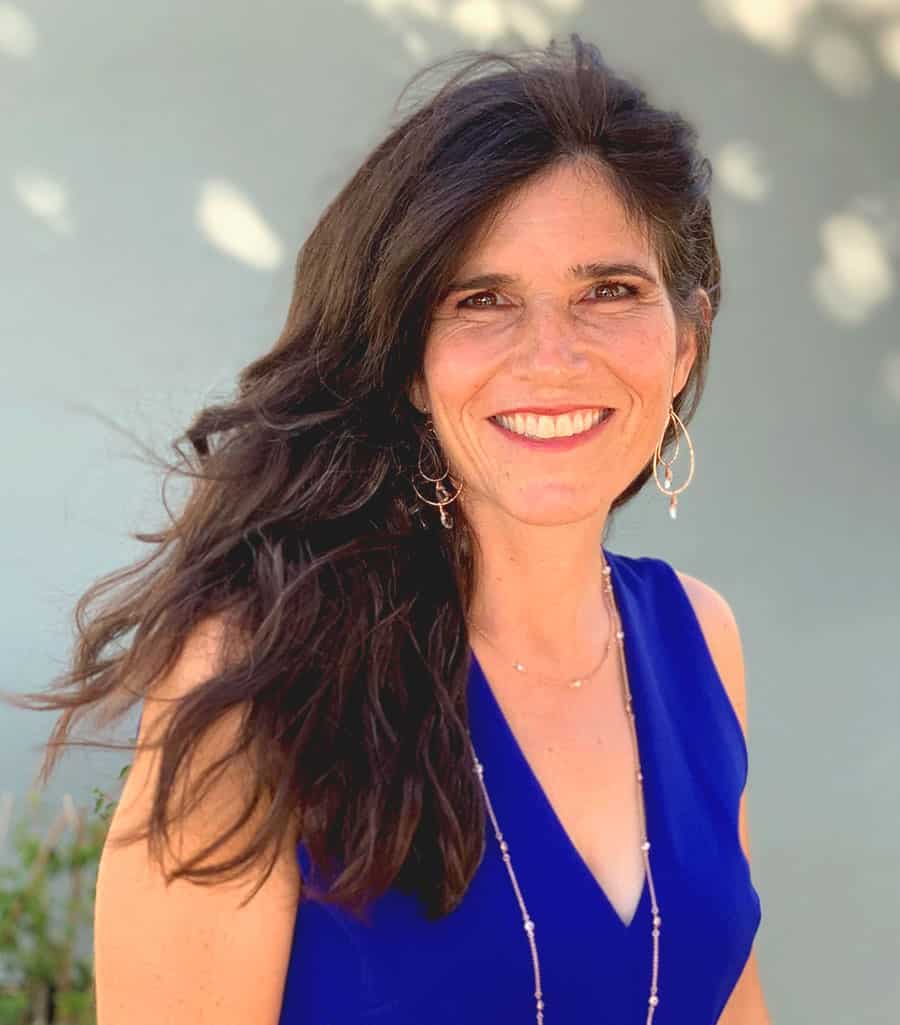
Julie Matthews

Certified Nutrition Consultant

PRESS RELEASE: Mayo Clinic Misinformed
PRESS RELEASE: 
Science Helps Validate Special Diets for Autism
PRESS RELEASE: Jenny McCarthy is Right! Autism Diets Can Help
ABC News Story: Can a New Diet Help Autistic Kids?
RECENT Autism Newsletter


Join Nourishing Hope

For Email Marketing you can trust


Julie explains how Diet can help Autism


April 01, 2008

Comment on Mayo Clinic's story: "Autism Diet: Are claims true?"

Comment re:  Autism diet: Are claims true?

Autism families need help, not opinionated discouragement from our nations leading scientific institutions. Why do organizations such as the Mayo Clinic spend time and effort trying to maintain a status quo that offers few helpful options. I believe it is irresponsible for them to try to prevent people from trying something that might be helpful.

Isn’t the purpose of science to observe, question, and test?  Since when does science defend doing nothing, and how can Mayo Clinic nutritionists NOT believe — diet helps, period! 

Would they recommend that a diabetic do nothing—not change their diet because it is “neither easily introduced nor easily followed long term” or “you might not see a benefit.” (as they state about autism diets).  Are these good reasons not to try something that’s proven beneficial to so many?

They use misleading statements like “Unfortunately, there is no scientific evidence to conclusively support or deny the claims that these autism diet interventions can or will make a significant improvement in the functioning of the child.”  What are they looking for?  There are numerous studies indicating that nutrient deficiencies, food allergies and intolerances, and digestive problems are common among children with autism.  You can see some of these on my blog, and over two hundred scientific references in my book, Nourishing Hope

These authors tout the mainstream party line of denial by saying “there is no evidence to support or deny the claims?” (that autism diets help).  Wouldn’t their time be better spent looking at the existing and emerging research rather than waiting for one single definitive study with a 100% efficacy rate that proves or disproves it?

Parents and other laypersons depend on experts with nutrition knowledge to distill the information, study the claims and find answers to support or deny claims based on their knowledge and research.  The research IS out there if one LOOKS for it.

The authors state, “As a dietitian, I feel my place in this debate is to inform an interested parent or family member of the complexities of the gluten free casein free diet.”  It seems they see it as a DEBATE that needs to be argued against and that her job is to inform parents of the COMPLEXITIES.

I feel very differently.  As a Certified Nutrition Consultant, I should explore what parents are experiencing in their real world applications.  My role is to investigate why autism diets are working.  My role is to notice how it helps a percentage of children.  My role is to apply my nutrition and biochemical understanding to why it helps, and how it can be utilized to help restore health.  My role is to identify any downside (which by the way, is small).  And finally, my role is to support parents, to teach them that diet DOES help, to help them learn how to implement diet, overcome obstacles, and help them do it healthfully.  My role is not to discourage them because diet may be challenging, or because one may not receive maximal results.

The authors find it important to remind parents that they “may or may not see any improvement in your child's condition.”  Why would they prepare people for disappointment?  Thousands of parents have found autism diets helpful.  Just because it is not 100% effective (what is?) they insinuate that it may not be worth trying - because they may not see improvement. In the real world, not seeing improvement is just an invitation to evolve the diet even further – because for most, giving up is not an option – and trying is always better than not. 

The authors appropriately suggest that parents work with a qualified, nutritionist specializing in the gluten-free/casein-free diet and autism, and to expect that you will need routine appointments to work through the challenges of introducing and following a specialized diet to avoid nutrient deficiencies and build good health.

While there is no magic bullet, countless parent experiences indicate that nourishing hope is worth it – no matter what the mainstream naysayers believe. As a Nutrition Consultant who has worked with autism for more than six years, I can tell you that diet does help and it is always worth trying!

Julie Matthews
Certified Nutrition Consultant

March 07, 2008

Parents Speak Out on Vaccine Settlement

By MIKE STOBBE
The Associated Press
Thursday, March 6, 2008; 10:32 PM

ATLANTA -- The parents of a girl who won a government settlement described how their hearts were broken as they watched their healthy, red-haired toddler transformed into an irritable, odd-behaving child after she got several childhood shots.

"Suddenly my daughter was no longer there," said Terry Poling, the girl's mother, in a news conference Thursday. She and her husband Jon said their daughter Hannah, now 9, has been diagnosed with autism.

The government has agreed to pay the Polings from a federal fund that compensates people injured by vaccines. The amount of the settlement hasn't been set yet. U.S. officials reject the idea that vaccines cause autism, but they say that in this case the shots worsened an underlying disorder that led to autism-like symptoms.

The Polings said five simultaneous vaccinations in July 2000 led to Hannah's autistic behavior. She was about 18 months at the time.

U.S. health officials have consistently maintained that vaccines are safe, and the head of the Centers for Disease Control and Prevention said Thursday that there was no change in that position.

"Nothing in any of this is going to change any of our recommendations" about the importance of vaccines for children, said Dr. Julie Gerberding. "Our message to parents is that immunization is lifesaving."

In the Polings' first appearance since their case became public this week, the Athens, Ga., couple acknowledged their legal case never got to the point where evidence was argued.

They called on the government to remove thimerosal _ a mercury-based vaccine preservative _ from all flu shots. Thimerosal has already been removed from other vaccinations given to children.

"Why take a chance?" asked Jon Poling, a 37-year-old neurologist.

The Polings, accompanied by Hannah, said that as a toddler, their daughter was a bright child who could whistle on command. But almost immediately after the vaccinations nearly eight years ago, she became feverish and irritable. Then, her behavior gradually changed so she would stare at fans and lights and run in circles.

"It wasn't like a switch being turned off. It was more like a dimmer switch being turned down," Jon Poling said.

Government health officials conceded that the vaccines exacerbated an underlying condition and that she should be paid from the federal vaccine-injury fund.

Autism advocates called Hannah's case a "landmark decision," although the Polings' own attorney disputes that.

"This was not a court decision," said Clifford Shoemaker, who is based in Vienna, Va. The U.S. Department of Health and Human Services conceded the case before the court was asked to make a determination, he added.

Government officials wouldn't discuss why they conceded this particular case, but said people with pre-existing disorders can obtain compensation under the program if they establish that their underlying condition was "significantly aggravated" by a vaccine.

Medical and legal experts say the narrow wording and circumstances probably make the case an exception _ not a precedent for thousands of other pending claims.

"This does not represent anything other than a very special situation," said the CDC's Gerberding.

Hannah has a disorder involving her mitochondria, the energy factories of cells. The disorder _ which can be present at birth from an inherited gene or acquired later in life _ impairs cells' ability to use nutrients. It often causes problems in brain functioning and can lead to delays in walking and talking.

Experts argued over how common the disorder is, and by implication, how many other vaccine cases might be affected.

"Most children with autism do not seem to have a mitochondrial problem, so this association ... is probably relatively rare," said Dr. Edwin Trevathan, a pediatric neurologist who heads the CDC's birth defects center.

The United Mitochondrial Disease Foundation, a Pittsburgh-based group that raises money for research, says there are more than 100 types of mitochondrial disease, and genetic tests can find only a couple dozen.

The Polings were exploring two theories about what happened to Hannah. One is that she was born with the mitochondria disorder and the vaccines caused a stress to the body that worsened the condition. The other was that the ingredient thimerosal caused the mitochondrial dysfunction, Jon Poling said.

Since 2002, the preservative thimerosal has been removed from shots recommended for young children, except for some flu shots.

March 05, 2008

Salmonella levels over 5x higher in battery eggs than organic

A couple years ago, I read an article during the holidays on how you should not let your children lick the bowl of cake batter or other batter with raw eggs.  The article went on to describe that while our parents let us do this years ago when we were kids, we should not do it now due to Salmonella in raw eggs.  What infuriated me was that they did not mention or consider WHY we can't do this NOW.  The article made it sound as though parents were just ignorant back then, but the truth is that is was not the same issue as it is now - they did not explain that battery or factory farming is what has increased the cases of Salmonella.  See the following article for more details on what a UK government survey found about salmonella and eggs.

NATURAL CHOICES, UK - 01.02.08

The Soil Association can reveal that a recent government survey shows that organic laying hen farms have a significantly lower level of Salmonella. Salmonella is a bacterium that causes one of the commonest forms of food poisoning worldwide.

The study showed that 23.4 per cent of farms with caged hens tested positive for salmonella compared to 4.4 per cent in organic flocks and 6.5 per cent in free-range flocks.
The research also showed that the highest prevalence of salmonella occurred in the largest holding size category (30,000 birds or more). This was over four times the average level of salmonella found in flocks closer to the maximum size allowed under Soil Association organic standards.

Intensively farmed chickens reared for meat can be housed in flocks 30 – 40,000 strong. Even the RSPCA’s Freedom Food standards allow 16,000 egg-laying birds per house, and there is no limit on flock size for free-range meat birds.

In contrast, Soil Association organic standards recommend flock sizes of 500 - with absolute maximum flock sizes of 1,000 for meat birds and 2,000 for egg birds allowed only with special permission and additional management measures in place.

These results support Hugh Fearnley-Whittingstall and his ‘Chicken Out’ campaign to improve the welfare standards of chicken production. It also adds weight to the argument that although ‘free-range’ production would certainly be a positive step forward, it is still some way behind the Soil Association’s organic poultry systems , which ensure truly free range birds and offer the highest standards of animal welfare as acknowledged by respected animal welfare groups such as Compassion in World Farming.

Some battery egg operations have as many as half a million birds. Most battery cages house four or five birds, each with about as much room as an A4 sheet of paper. All animals on Soil Association organic farms must have access to outdoor ranges and pasture, with an emphasis on enabling the animals to express their natural behaviour. Unlike intensively reared birds, organic chickens can’t be given routine doses of antibiotics which weaken the animal’s natural immune system so increasing reliance on drugs, as well as being linked to creating antibiotic resistant ‘superbugs’ with serious human health implications.

There are now approximately 29 million egg-layers in the UK over 70 per cent of which are housed in battery cages. Today three-quarters of the UK’s eggs come from fewer than 300 units, each with 20,000 or more layers.

Emma Hockridge, Soil Association policy department said: “Anyone watching Hugh and Jamie reveal the appalling conditions millions of chickens endure in the cramped, windowless sheds of factory farms will be in no doubt that organic and free-range chickens have a better life.

"This research confirms the Soil Association’s view that there are serious potential human health implications from such intensive systems. Whilst Salmonella food poisoning can be avoided through proper cooking of eggs and meat, anything that reduces the incidence of this bug should be encouraged – like genuine free-range, organic farming.”